




A standard toilet is something most people never think about - until sitting down and standing back up starts to feel difficult. For many older adults, low toilet seats can place significant strain on the knees, hips, and lower back, turning a routine daily task into a source of discomfort, frustration, or even concern about falling.
This challenge is especially common for those living with arthritis, recovering from surgery, or managing mobility limitations. The deep bend required by a standard toilet demands strength, balance, and joint flexibility that may not always be available.
How long do you expect to need this equipment?
Thanks for voting
Your answer has been counted.
A raised toilet seat, sometimes called a toilet riser or toilet seat raiser, offers a simple, affordable solution. By increasing seat height, it can make bathroom visits more comfortable while helping users maintain their independence, privacy, and confidence.
When choosing bathroom aids, how much does the weight limit matter to you?
Thanks for voting
Your answer has been counted.
We will teach you the benefits of using a raised toilet seat, explain how to choose the right model for your needs, and review the best options available today.
Benefits of Raised Toilet Seats
A raised toilet seat may seem like a small change, but it can make a remarkable difference in everyday comfort and safety. By adding just a few inches of height, it reduces how far a person needs to lower themselves when sitting and how much effort it takes to stand back up. For seniors with stiff joints, weak leg muscles, or balance concerns, that reduction in movement can be a game changer.

The physical benefits are especially noticeable for people dealing with arthritis, chronic joint pain, or limited mobility. A raised elevated toilet seat helps reduce stress on the knees and hips by limiting deep bending, which is often the most uncomfortable part of using a standard toilet. Many users report that bathroom visits feel less exhausting because they no longer need to "drop" down onto the seat or struggle to rise afterward.
Safety is another major advantage. An elevated toilet seat shortens the distance between standing and sitting, helping users maintain better control throughout the movement. Models such as a raised toilet seat with handles or raised toilet seat with arms provide additional leverage, allowing users to use their upper body strength for extra support.
This can be particularly valuable after hip or knee replacement surgery, when doctors often recommend limiting excessive bending. A toilet seat riser with handles can make following those recovery guidelines much easier.
Beyond the physical benefits, there's an emotional one that matters just as much: independence. A raised toilet seat for seniors can help people continue using the bathroom safely on their own, preserving privacy, confidence, and dignity in a part of daily life that many prefer to manage without assistance.
How to Choose the Right Raised Toilet Seat
Not all raised toilet seats are the same, so taking a few measurements before buying can save frustration later. The first step is determining whether your toilet has a standard round bowl or an elongated raised toilet seat design. Most elongated bowls extend farther from the wall and provide a larger seating area, while round bowls are more compact. A quick measurement of the bowl length will tell you which style you need.
Next, consider seat height. Most products add between 2 and 6 inches to the existing toilet height. Someone with mild knee discomfort may only need a small lift, while a person recovering from surgery or using a walker may benefit from a taller toilet seat raiser. The goal is to make sitting and standing easier without making the seat so high that the user's feet no longer rest comfortably on the floor.
Support features are equally important. A raised toilet seat with handles provides additional leverage when sitting down and standing up, making it a popular choice for seniors and individuals with balance concerns. A raised toilet seat for elderly users often includes arm supports for this reason. However, some people prefer a simple toilet riser without handles, particularly if they perform wheelchair transfers or have a very narrow bathroom where armrests may get in the way.
You'll also want to consider how the seat attaches to the toilet. Tool-free clamping systems are easy to install, remove, and travel with. Hardware-mounted options take longer to install but generally provide the highest level of stability for long-term use.
Finally, pay close attention to durability. Look for easy-to-clean materials, secure locking mechanisms, and a weight capacity that comfortably exceeds the user's needs. A properly fitted raised toilet seat provides more than convenience: it helps create a safer and more confident bathroom experience.
The Best Raised Toilet Seats for Elderly
The best raised toilet seat is the one that matches your mobility needs, bathroom layout, and level of support. To make your decision easier, we've compared the top options for seniors, post-surgery recovery, arthritis relief, and everyday bathroom safety.
Pelegon Raised Toilet Seat With Handles (400 lb)
A sturdy, highly adjustable option for users who need strong bilateral support and more flexibility than a basic toilet riser provides.
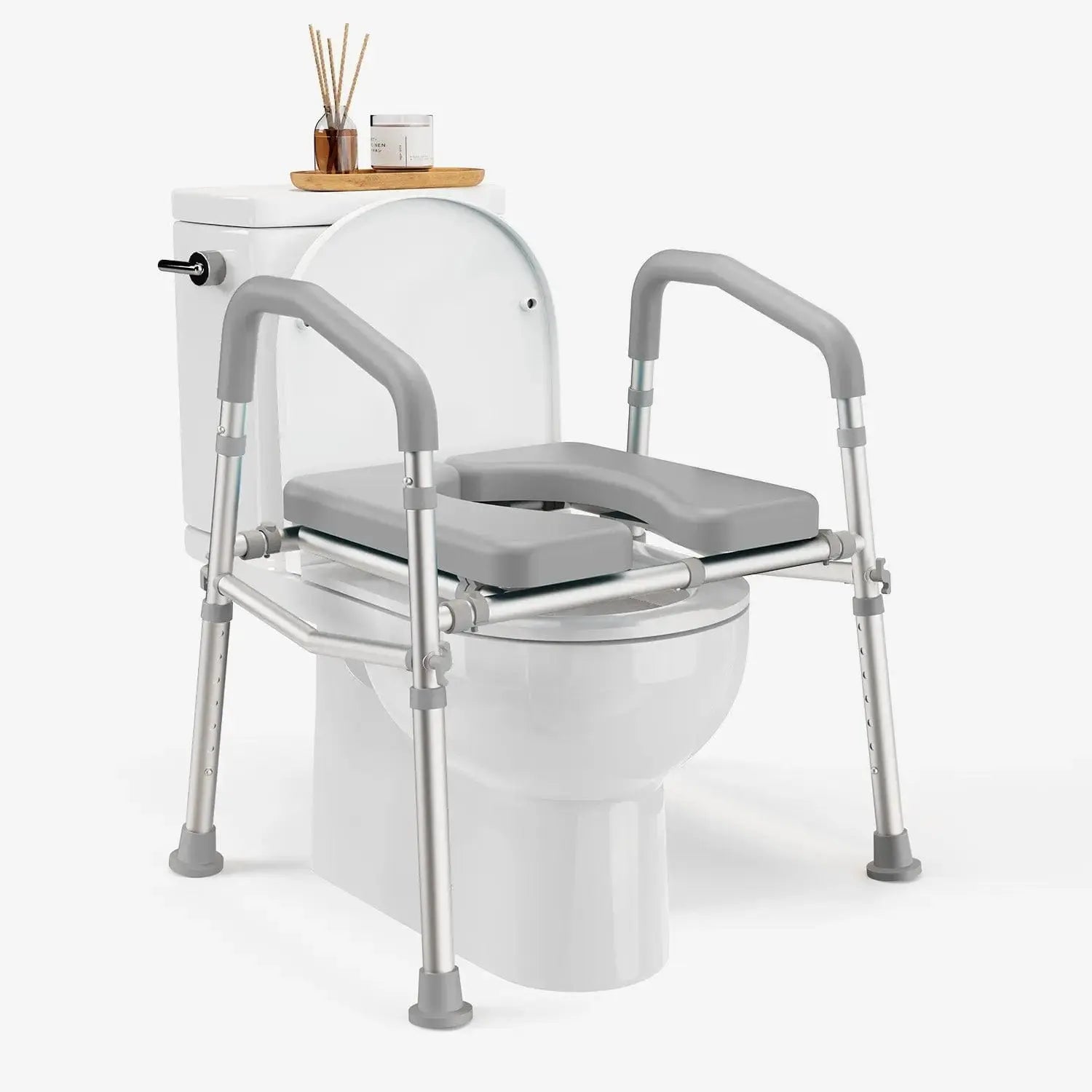
Why We Chose It
The adjustable height, handle width, padded grips, and anti-slip feet create a secure fit for a wider range of users. Its reinforced frame supports up to 400 pounds without relying entirely on the toilet bowl.
Pros
- Adjustable seat height and handle width
- 400-pound weight capacity
- Padded, water-resistant grips
- Tool-free assembly
Potential Limitations
- Requires more floor space than a seat-mounted riser
- May feel bulky in very narrow bathrooms
Pelegon Raised Toilet Seat With Handles (300 lb)
This compact model adds 3.5 inches of height and provides padded leverage without the footprint of a full freestanding frame.

Why We Chose It
The fixed 3.5-inch lift reduces deep knee and hip bending, while the padded armrests provide reliable leverage. Separate standard and elongated models help ensure a more secure bowl fit.
Pros
- Compact bowl-mounted design
- Padded, slip-resistant handles
- Available for standard and elongated bowls
- Easy-to-clean surface
Potential Limitations
- The 3.5-inch height is not adjustable
- Requires side clearance for the armrests
Lunderg Foam Toilet Seat Riser
A softer alternative to rigid raised toilet seats, this firm foam riser adds two inches of height while cushioning sensitive joints.
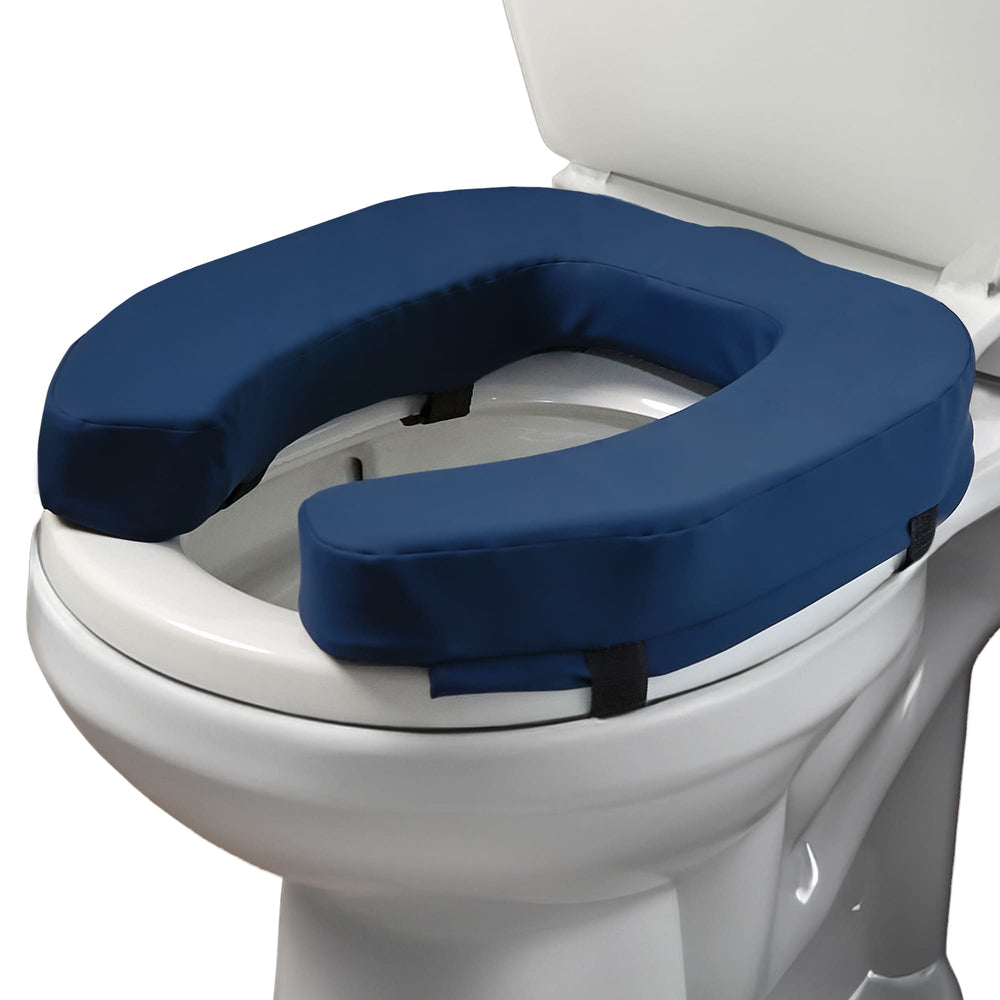
Why We Chose It
High-density foam provides a firm but more forgiving surface than molded plastic. Velcro straps, suction cups, and slip-resistant fabric help keep the cushion securely positioned during use.
Pros
- Soft, comfortable sitting surface
- Fits most common toilet shapes
- Fluid-resistant and easy to clean
- Removable, machine-washable cover
Potential Limitations
- Provides less leverage than models with handles
- Must be removed to lift the seat or close the lid
Medline Locking Elevated Toilet Seat
This tall toilet riser adds approximately five inches of elevation, making it a practical choice for users who struggle with deep bending.
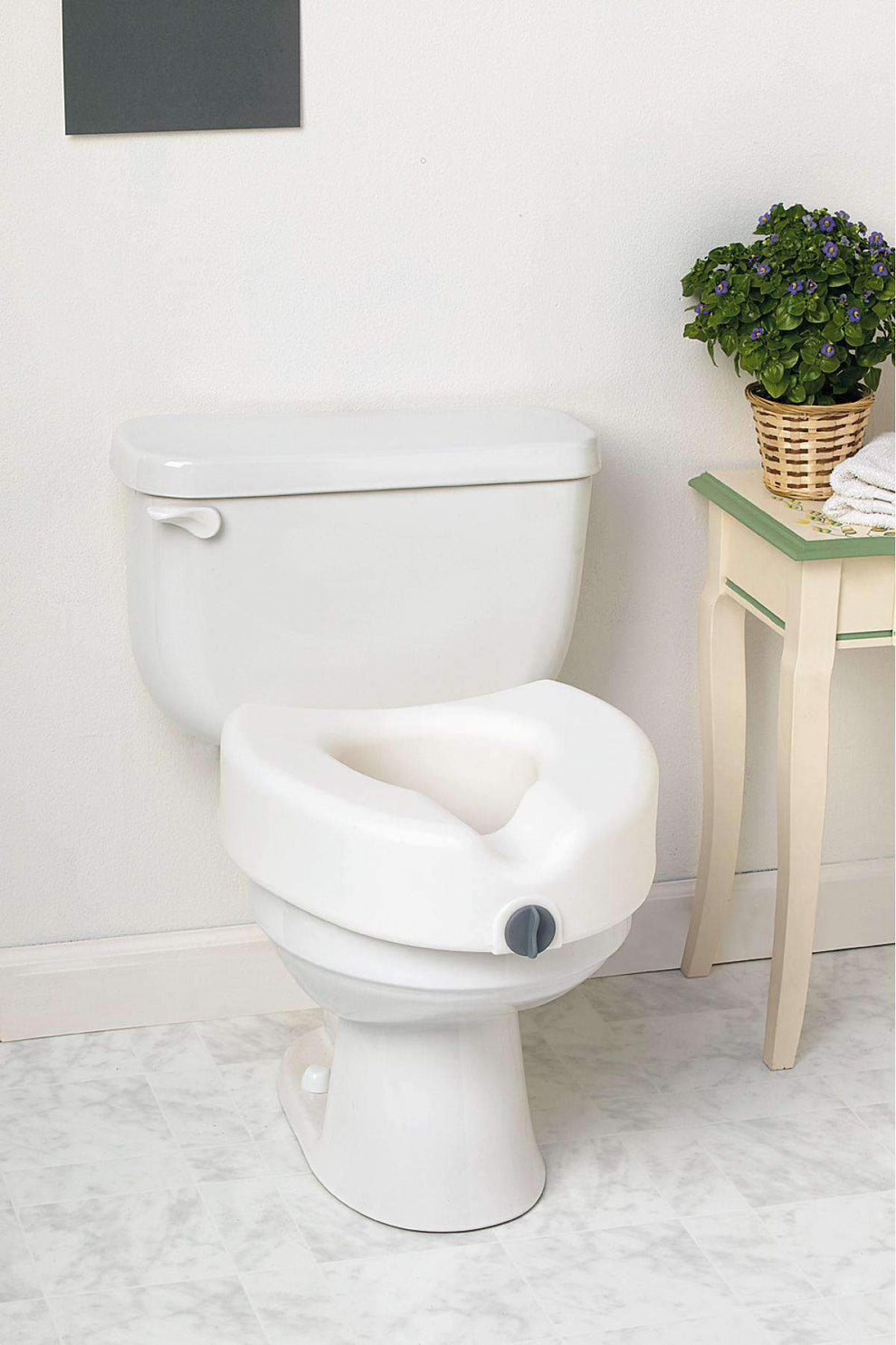
Why We Chose It
The front clamping mechanism helps prevent shifting without permanent bathroom modifications. Its wide, contoured surface offers more room than many compact risers, and versions are available with or without arms.
Pros
- Generous elevation for limited mobility
- Secure front locking mechanism
- Wide, contoured seating surface
- Available with optional arm supports
Potential Limitations
- May be too tall for shorter users
- Not guaranteed to fit every bowl shape
Journey SoftSecure 3-in-1 Commode Chair
This versatile mobility aid functions as a bedside commode, shower chair, and raised toilet seat in one padded frame.
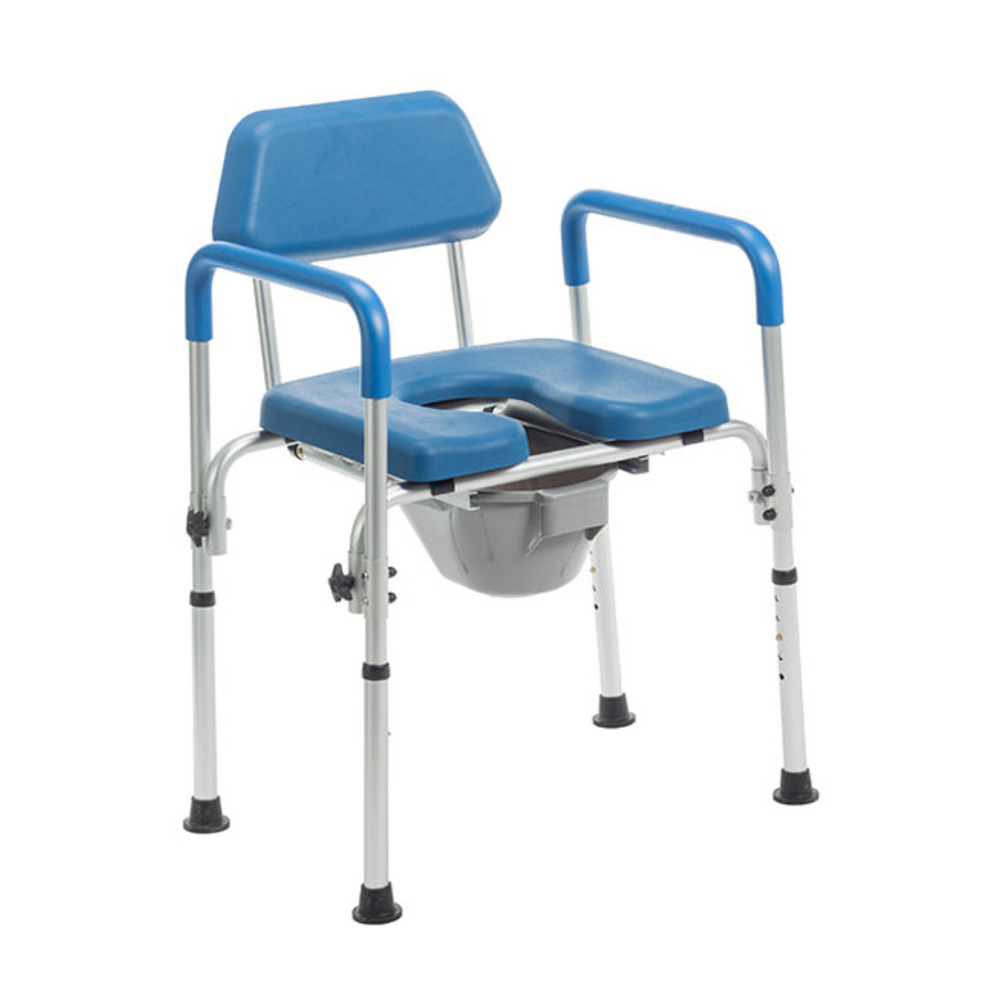
Why We Chose It
Its rustproof aluminum frame and closed-cell padding work well in both bedroom and bathroom settings. The 22-inch-wide seat offers more space, while the removable bucket allows bedside use when reaching the bathroom is difficult.
Pros
- Three bathroom aids in one product
- Wide, padded seat and armrests
- Rust-resistant aluminum frame
- Adjustable height and tool-free setup
Potential Limitations
- Requires considerably more floor space
- Bulkier to store than a basic toilet seat raiser
Medline Drop-Arm Commode With Padded Seat
Swing-down arms create a clearer path for lateral transfers, making this padded commode especially useful for wheelchair users and caregivers.
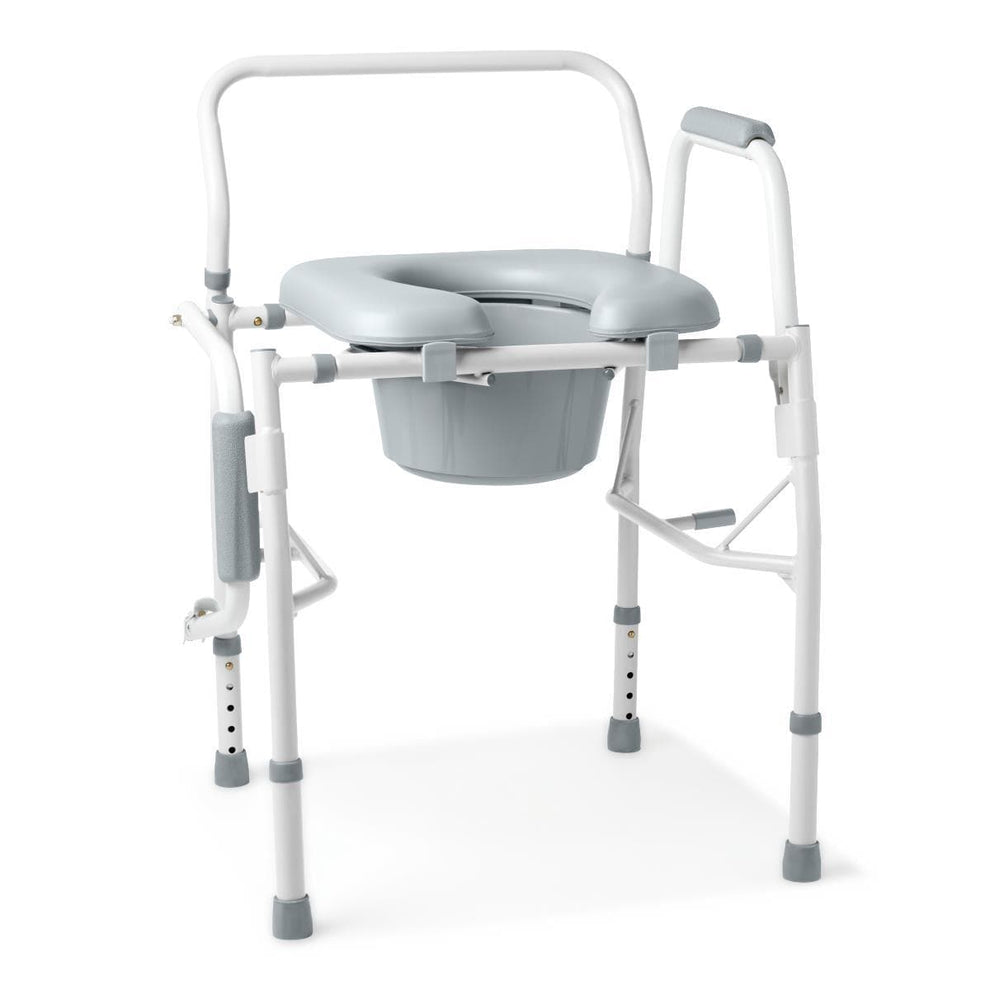
Why We Chose It
Each arm lowers with the push of a button, reducing obstacles during side transfers. A padded seat, backrest, and non-slip foam handgrips improve comfort during longer-term use.
Pros
- Drop arms simplify lateral transfers
- Padded seat and removable backrest
- Includes pail, lid, and splash guard
- Clip-on seat removes for cleaning
Potential Limitations
- Larger than a standard raised toilet seat
- Transfer setup may require caregiver assistance
Vive Health Toilet Seat Riser
A simple, affordable riser that adds 3.5 inches while allowing users to keep their existing toilet seat and lid.

Why We Chose It
The riser installs beneath the existing seat for a more familiar bathroom setup. Its hinged frame lifts for easier bowl cleaning, while the split-resistant composite construction supports up to 350 pounds.
Pros
- Affordable and discreet design
- Retains the existing seat and lid
- Hinges upward for easier cleaning
- Standard and elongated sizes available
Potential Limitations
- Does not include handles or arm supports
- Correct bowl size must be selected

