




A sudden tweak or lingering ache in the lower back can turn ordinary tasks, like getting dressed, driving, or loading the dishwasher, into uncomfortable challenges. Traditional ice bags rarely make recovery easier: they leak, slide out of place, and force you to remain perfectly still just to keep the cold where it is needed.
A lower back ice pack wrap offers a more practical alternative by securing cooling therapy around the lumbar area while leaving your hands free. The right design can provide broad, consistent coverage without interrupting every movement or rest period. Finding the best ice pack for lower back pain is therefore more than a matter of convenience; it can be a useful step toward managing discomfort and returning to daily activity. The goal is to help you understand when cold therapy makes sense and choose a wrap that provides dependable coverage, stays securely in place, and suits your recovery routine.
Question 1
How long do you expect to need this equipment?
Thanks for voting
Your answer has been counted.
Understanding Lower Back Ice Therapy
Are ice packs good for lower back pain? They can be, particularly when discomfort begins after a sudden strain, minor injury, or activity-related flare-up. Cooling the area temporarily constricts local blood vessels and slows nerve signaling, which can help limit swelling and dull sharp pain. It provides symptom relief rather than correcting the underlying cause, so persistent or unexplained pain still deserves medical attention.
Timing matters. The American Academy of Orthopaedic Surgeons recommends ice during the first 24 to 48 hours of an acute muscle injury to help control swelling and pain. Johns Hopkins Medicine similarly advises avoiding heat during the first 48 hours after an injury because warmth increases blood flow to the area. Although cold is commonly suggested for the first 48 to 72 hours, the best choice depends on the symptoms rather than the calendar alone.
Ice generally makes more sense when pain follows a new injury or is accompanied by swelling or a hot, irritated feeling. Heat is often more comfortable for long-standing stiffness, tight muscles, and spasms. These are guidelines rather than rigid rules: stop either treatment if it worsens the pain, and seek guidance when the cause is uncertain.
The design of the pack also affects how useful it will be. A standard rectangular gel pack may work well while reclining, but it usually needs to be held in place and can shift when the user sits or stands. A wearable wrap secures the cold source against the lumbar area, making short periods of gentle movement more manageable.
Because lumbar discomfort may extend across both sides of the spine, large ice packs for lower back treatment offer more even coverage than small packs intended for a knee or shoulder. Look for a gel insert that remains flexible after freezing so it can follow the curve of the back rather than pressing against it like a rigid block. Long-lasting cooling gel reduces the need for frequent refreezing, while wide, adjustable straps help distribute pressure and keep the wrap secure during sitting or walking. The best fit should feel supportive without restricting breathing, circulation, or comfortable movement.
Top 5 Lower Back Ice Pack Wraps
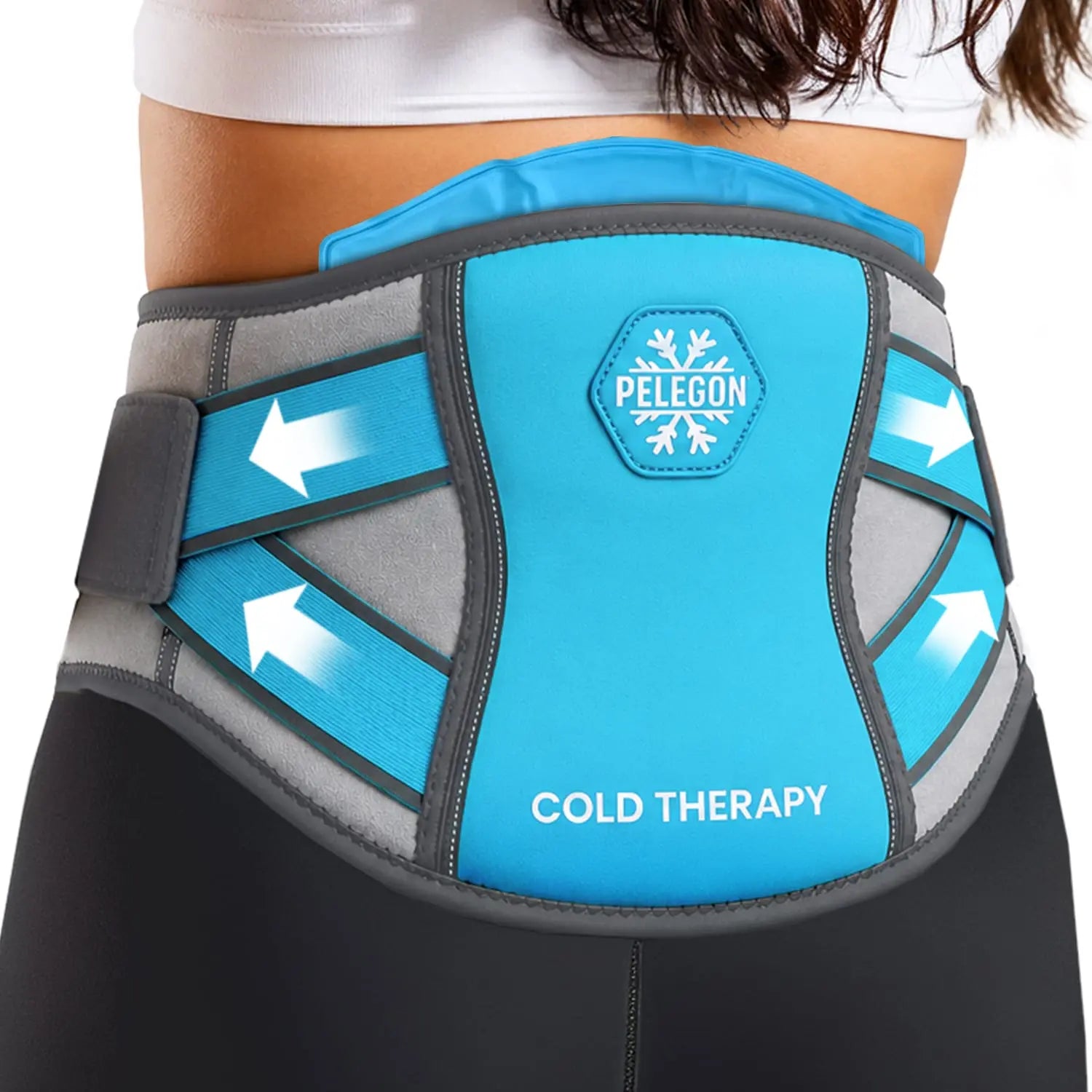
Pelegon Lower Back Ice Pack Wrap
Why We Chose It
Pelegon pairs a flexible 12.9 × 7.4-inch gel insert with a 50-inch dual-strap brace for secure, hands-free compression. This lower back ice pack wrap contours around the lumbar area to address soreness, spasms, tailbone discomfort, and pulled muscles without the pressure of a rigid pack. The removable insert delivers up to 20 minutes of cooling, while the washable brace and protective freezer bag make repeat use easier.
Pros
- Flexible gel contours to the lumbar area
- Dual straps provide adjustable compression
- Removable insert simplifies cleaning
- Protective freezer bag included
- Secure, hands-free design
Potential Limitations
- Includes only one gel insert
- Maximum 50-inch brace fit
- Compression may feel firm over sensitive surgical areas
KingPavonini Extra Large Ice Pack

Why We Chose It
KingPavonini uses a 13.4 × 8.7-inch flexible insert to provide broad, evenly distributed lumbar coverage. Its extension strap fits waists up to 62 inches, while two reusable packs allow users to alternate sessions without waiting for the gel to refreeze. Soft Lycra and a ventilated elastic belt improve comfort, although the extra-large design may feel bulky on smaller frames.
Pros
- Extra-large cooling area
- Extension strap fits waists up to 62 inches
- Two interchangeable inserts
- Flexible, evenly distributed gel
- Soft Lycra and ventilated elastic
Potential Limitations
- May feel oversized on petite users
- Wide construction can feel bulky while seated
- Additional gel may increase overall weight
Comfytemp Ice Pack for Back Pain Relief

Why We Chose It
Comfytemp includes two flexible gel inserts for alternating hot and cold therapy. Its adjustable belt fits waists up to 48 inches, while double-sealed nylon-and-vinyl construction supports repeated use with less risk of leaks. The packs contour around the lumbar area and tailbone, making them useful for sudden flare-ups or recurring stiffness, although heated inserts must be temperature-tested before use.
Pros
- Supports cold and heat therapy
- Two reusable inserts included
- Flexible gel conforms to the back
- Double-sealed construction
- Latex-free materials
Potential Limitations
- Smaller maximum fit than KingPavonini
- Heating requires careful temperature testing
- Nylon and vinyl may feel less breathable
Comfcube Ice Pack for Back Pain Relief

Why We Chose It
Comfcube uses segmented ice capsules to distribute cold evenly and remain flexible around the waist. The dual-strap wrap fits waists up to 50 inches, limits shifting, and can retain cold for up to two hours - though each application should still be limited to 20 minutes. Its covered capsules reduce condensation, but may feel firmer against the body than a smooth gel pack.
Pros
- Extended cold-retention design
- Segmented capsules distribute cooling
- Flexible construction follows body contours
- Two straps improve stability
- Sealed freezer-storage bag included
Potential Limitations
- Capsules may feel less smooth than gel
- Not safe for two hours of continuous application
- Structured sections may appear bulky under clothing
REVIX Ice Pack for Injuries

Why We Chose It
REVIX stays flexible at temperatures as low as -13°F and can be secured around the back, shoulder, elbow, thigh, shin, or calf. Its plush side offers gentler cooling, while the nylon side provides more direct cold contact. Reinforced seams and a stretch strap support repeated, hands-free use, although its universal shape offers less precise lumbar coverage than a dedicated back wrap.
Pros
- Suitable for several body areas
- Remains flexible at low temperatures
- Two surfaces offer different cooling intensity
- Thick nylon and reinforced seams
- Stretch strap supports hands-free use
Potential Limitations
- Less anatomically shaped for the lumbar region
- No waist-fit measurement was provided
- Single strap offers less compression control
Move More Comfortably With the Right Support
A well-designed lower back ice pack offers a simple, non-invasive way to manage pain during a recent strain or sudden flare-up. Choosing a hands-free wrap makes cold therapy easier to use at home, providing targeted coverage without forcing you to hold a loose pack in place or remain completely still.
Cold relief designed to stay in place
Explore Pelegon’s reusable cold therapy products for comfortable, hands-free relief at home.
Prioritize flexible gel, adequate lumbar coverage, comfortable materials, and straps that stay secure without restricting movement or circulation. Cold therapy can ease symptoms, but it does not address every cause of back pain or replace appropriate treatment. With the right support and sensible use, at-home pain management can make everyday movement feel more comfortable and manageable.
Consult a doctor or physical therapist if sharp pain persists, worsens, or travels down the leg - especially when accompanied by weakness or numbness.
Frequently Asked Questions
Should I apply a lower back ice pack directly to my bare skin?
No. Place a thin cloth or protective fabric layer between the cold pack and your skin to reduce the risk of irritation or cold injury.
How long should you keep an ice pack on your lower back?
Keep it on for 15 to 20 minutes per session. When deciding how long to keep an ice pack on lower back pain, always follow the product instructions and check your skin frequently.
Can you sleep with an ice pack on your lower back?
No. Sleeping with an ice pack can lead to prolonged exposure, numbness, skin damage, or cold injury.
Is a lower back ice pack better than lower back pain patches?
Neither is universally better. Ice provides temporary cooling for acute pain and swelling, while medicated patches deliver topical ingredients and may have different risks or restrictions.
Can you heat a lower back ice pack to switch to heat therapy?
Only if the manufacturer specifically labels it microwave-safe. Heating a cold-only pack can damage its seams, cause leaks, or create dangerously hot areas.
How do you clean a wearable lower back ice pack wrap after sweating?
Remove the gel insert and clean the fabric wrap according to its care label. Hand-wash with mild soap when permitted, then let it air-dry completely before reinserting the pack.


