




A fall can shake more than balance. It can make sitting down or standing up - movements that once required no thought - feel uncertain and frightening. During recovery, low cushions, deep seats, and unstable armrests may place added strain on painful joints and increase the risk of another fall.
An electric lift chair for seniors provides controlled support through both movements, helping the user rise without pulling on a caregiver or dropping heavily into the seat. For someone rebuilding strength, it can bridge the gap between limited mobility and greater independence at home. For family caregivers, it offers a practical way to reduce stressful transfers while preserving the dignity of the person they support.
How long do you expect to need this equipment?
Thanks for voting
Your answer has been counted.
We reviewed the top electric lift chair options, the features that matter most, and how the right design can make fall recovery safer and more comfortable.
Who are you shopping for?
What matters most in a tray table?
Where would it be used most?
Thanks for voting
Your answers have been counted.
When choosing bathroom aids, how much does the weight limit matter to you?
Thanks for voting
Your answer has been counted.
Top 8 Electric Lift Chair Choices for Stress-Free Fall Recovery
Pelegon Electric Lift Chair for Fall Recovery
Best Overall Fall Recovery Chair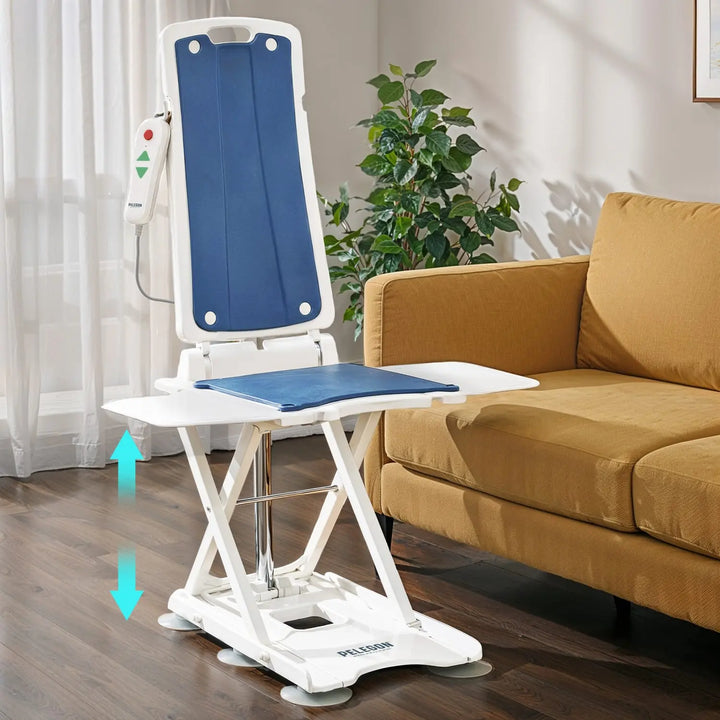
Pelegon’s battery-powered scissor lift raises users up to 300 pounds from the floor or bathtub to an 18-inch seated height. Its IP68 waterproof motor, suction-cup feet, and 27.5-inch transfer surface make it a secure electric chair lift for tub and floor recovery. Weighing 24.6 pounds, this collapsible electric lift chair folds to approximately six inches and includes a simple Up, Down, and Emergency Stop controller.
Why We Chose It
Pelegon combines floor recovery, bathtub compatibility, simple controls, and genuinely compact storage in one caregiver-friendly design. Its emergency-stop button and widening side flaps provide practical advantages that many basic floor lifts omit.
Safe Daily Use
Place the lift on a firm, level surface and confirm that every suction cup is fully engaged before raising the seat. Keep the user centered, remain beside them throughout the lift, and never use the chair when a fall may have caused a head, neck, spinal, or hip injury.
Major Strengths
- Works on the floor and inside a bathtub
- Simple remote with an emergency-stop control
- Wide side flaps simplify lateral transfers
- Lightweight and exceptionally slim when folded
Potential Limitations
- Not an everyday padded recliner
- Requires enough mobility or assistance to reach the seat
- Not suitable for users over 300 pounds
Best suited for: Older adults at risk of non-injury falls, people rebuilding strength after orthopedic recovery, and caregivers who want a portable lift for both the bathroom and other rooms. It may not suit someone who needs continuous postural support, a full patient sling, or a bariatric capacity above 300 pounds.
VOCIC AX35 Electric Transfer Chair Lift
Best for Room-to-Room Transfers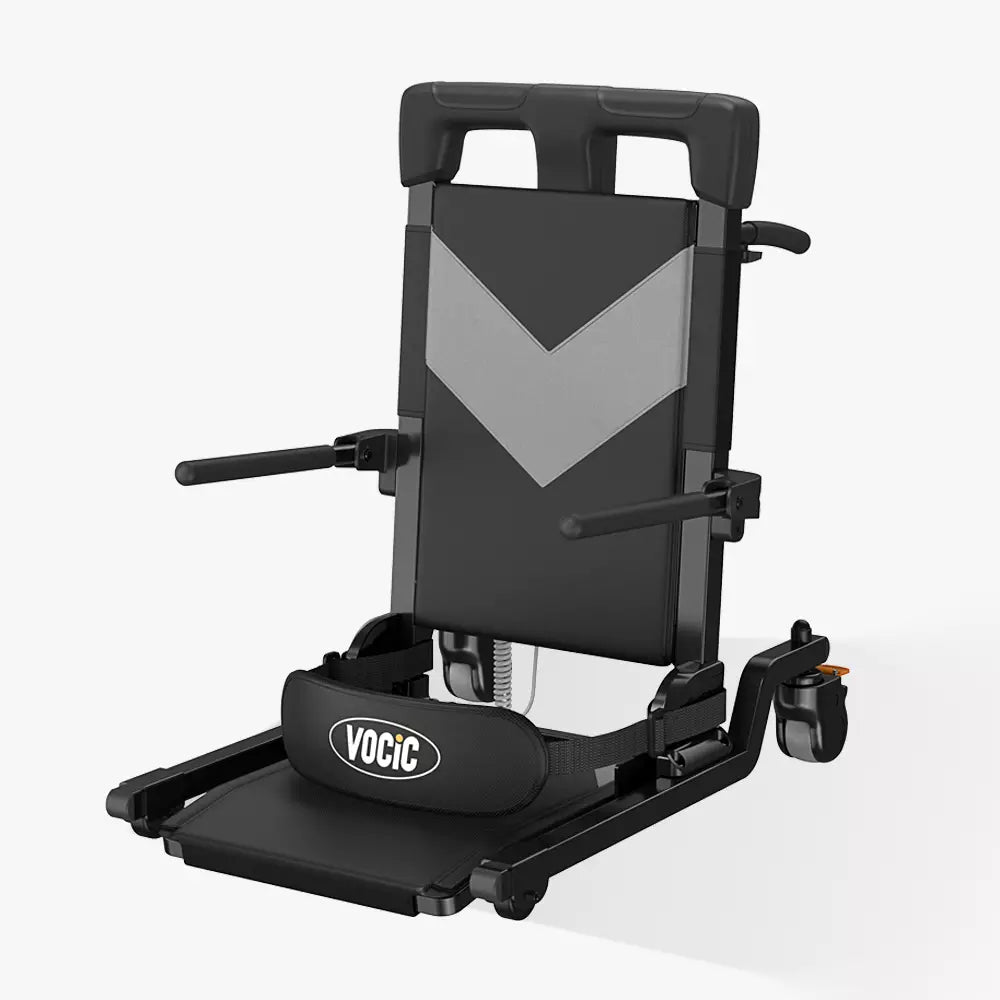
The VOCIC AX35 raises users up to 350 pounds from 2.7 to 20 inches and supports short indoor transfers on four wheels. Its sturdy frame, rear brakes, handrails, safety belt, foam seat, and simple hand controller provide stable operation. This foldable patient lift chair is best for moving someone from the floor toward a bed, wheelchair, or another transfer point.
Why We Chose It
Most floor lifts stop once the user reaches chair height. The AX35 adds controlled indoor transport, making it a stronger choice when the recovery plan involves several transfer surfaces within the home.
Safe Daily Use
Lock the rear brakes before lifting or lowering, fasten the safety belt, and use the wheels only on level indoor flooring. The chair should be pushed by a caregiver and should not be treated as a wheelchair for independent mobility or outdoor transportation.
Major Strengths
- Higher 350-pound capacity
- Wheels support short room-to-room transfers
- Folds for storage
- Includes handrails, brakes, and a safety belt
Potential Limitations
- Minimal long-term seating and lumbar support
- Heavier than non-wheeled portable lifts
- Requires caregiver control during transport
Best suited for: Users who need an elderly lift assist device from floor plus short transfers between rooms. It may not be ideal for independent users, uneven floors, narrow doorways, or anyone needing a fully upholstered recovery chair.
Platinum Health Phoenix Floor Lift Assist Power Chair
Best Lightweight Waterproof Option
The Platinum Health Phoenix raises users up to 300 pounds from approximately three to 20 inches. Its waterproof steel frame weighs 28 pounds, folds for storage, and includes transfer ramps, a slide mat, rechargeable battery, and simple push-button control. This portable floor lift for elderly users is designed for temporary recovery rather than reclining or extended sitting.
Why We Chose It
At 28 pounds, the Phoenix balances steel-frame strength with manageable portability. Its rechargeable battery, waterproof design, transfer ramps, and slide mat make positioning simpler than with a rigid platform alone.
Safe Daily Use
Inspect the ramps and locking points before each use, keep the user centered, and charge the battery according to the manufacturer’s schedule. A caregiver should stabilize the user during the transition onto the seat and again when transferring off at full height.
Major Strengths
- Lightweight for a steel-framed lift
- Waterproof construction
- Integrated ramps and slide mat
- Rechargeable battery operation
Potential Limitations
- Limited padding and back support
- No emergency-stop button is specified
- Lower capacity than several competitors
Best suited for: Families seeking lightweight devices to lift elderly off floor after a non-injury fall, particularly when the lift must be carried between rooms. It is not intended to replace an upholstered chair, wheelchair, or full-body patient lift.
Lift Buddy Motorized Floor-to-Seat Recovery Chair
Best for Full Upper-Body Support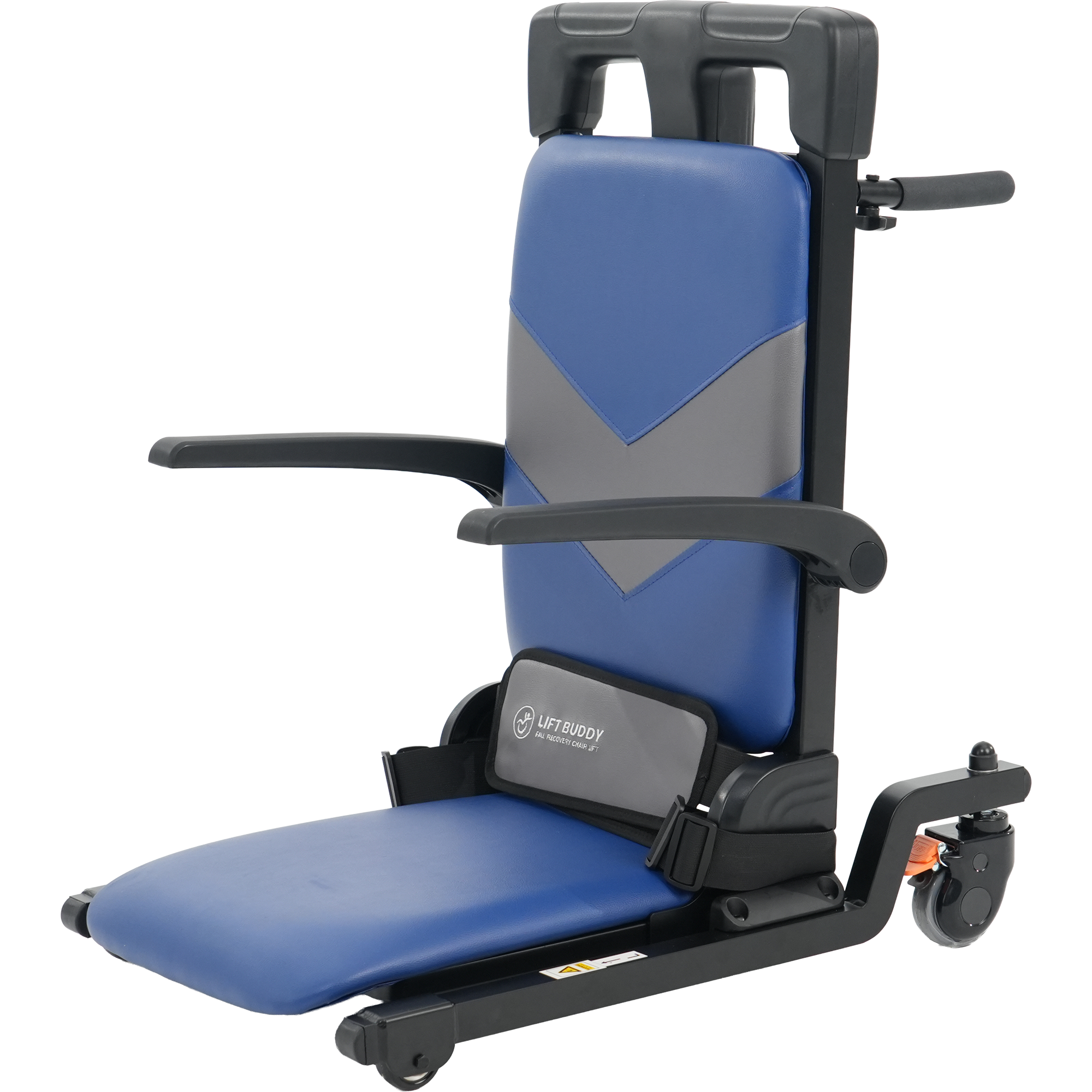
Why We Chose It
Lift Buddy surrounds the user with more support than a platform-style lift. The backrest, armrests, and belt can help a shaken or fatigued person remain upright while the seat rises.
Safe Daily Use
Secure the belt before activating the lift and make sure the user’s hands, feet, clothing, and medical tubing remain clear of moving components. A caregiver should stay within reach even when the user can operate the controller independently.
Major Strengths
- Backrest, arms, and belt provide added support
- 352-pound capacity
- Raises to a useful transfer height
- More chair-like than an open platform
Potential Limitations
- Narrow 15-inch seat may not fit every user
- Heavier than compact scissor lifts
- Not designed for prolonged sitting or reclining
Best suited for: Seniors with trunk weakness, post-fall fatigue, or anxiety who benefit from supported upright seating during the lift. It may not fit broader users comfortably and is not a substitute for an emergency response when injury is suspected.
IndeeLift FTS-400 Floor-to-Stand Lift
Best Floor-to-Standing Assistance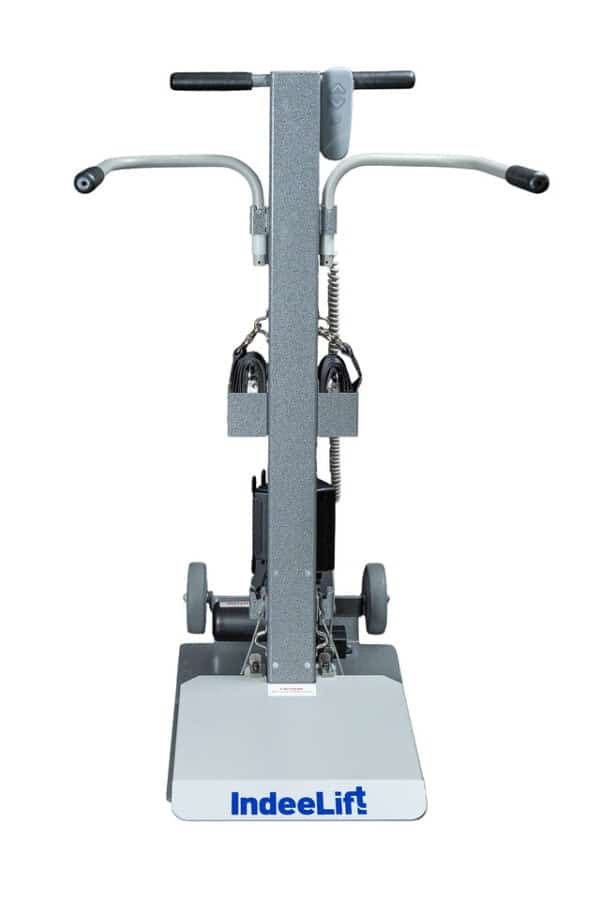
The IndeeLift FTS-400 raises users up to 400 pounds from the floor and tilts forward to assist with standing. It includes removable support handles, two safety belts, a rechargeable battery, and a simple wired remote. This sturdy lift for elderly from floor situations fits tight spaces, although its 84-pound frame is not easily portable.
Why We Chose It
The FTS-400 bridges floor recovery and standing assistance, a combination that lighter platform lifts generally cannot provide. Its 400-pound limit, transfer handles, dual belts, and battery operation make it one of the most substantial home-use options in the comparison.
Safe Daily Use
Use the standing function only when the person can bear weight and has been cleared to perform supported standing transfers. Engage both belts, position the feet securely, and have a caregiver supervise until a physical or occupational therapist confirms that independent operation is appropriate.
Major Strengths
- Raises the user from floor level toward standing
- 400-pound capacity
- Dual belts and removable support handles
- Can be operated by the user or a caregiver
Potential Limitations
- Heavy and not easily portable
- Firm seat is intended for transfers, not relaxation
- Standing mode requires adequate weight-bearing ability
Best suited for: Users with sufficient leg control to complete assisted standing, including some seniors progressing through rehabilitation after a fall or surgery. It may not be appropriate after a total hip replacement until the surgeon or therapist approves the seat angle and standing motion.
Raizer II Mobile Lifting Chair
Best Professional-Style Portable Lift
The battery-powered Raizer II is assembled around the fallen person, reducing the need to slide them onto a platform. It lifts up to 330 pounds into an upright position in 20–30 seconds, with head and neck support, a safety belt, and remote operation. Its portable components suit trained caregivers, although assembly requires practice and the surfaces are not intended for extended sitting.
Why We Chose It
Because the Raizer II is assembled around the person, it limits the repositioning needed before lifting. That distinction can be valuable when the user cannot comfortably scoot or slide onto a conventional recovery seat.
Safe Daily Use
Caregivers should complete product training and follow the assembly sequence exactly before attempting a lift. Check for injuries first, support the head and neck as directed, attach the belt, and ensure every component is fully locked before activating the motor.
Major Strengths
- Assembles around the fallen person
- Supports the head, back, and legs
- Can be operated by one trained caregiver
- Relatively fast lifting cycle
Potential Limitations
- Requires correct multi-part assembly
- Premium professional-level price
- Minimal padding for prolonged sitting
Best suited for: Trained family caregivers, home-care professionals, and users who cannot easily move onto a platform-style electric chair lift from floor level. It may be excessive for infrequent use or caregivers who want immediate one-piece deployment.
Safer Recovery Starts at Home
A high-quality electric lift chair can turn one of the most difficult moments of recovery into a controlled, manageable experience. Whether it supports daily sit-to-stand movement or serves as one of the devices to lift elderly off floor, the right model makes the home safer for aging in place.
For family caregivers, mechanical assistance reduces the physical burden of lifting and the constant worry about what might happen after another fall. Choosing support is not surrendering independence; it is a practical way to protect it while strength and confidence return.
If you are uncertain about seat height, positioning, weight-bearing ability, or post-surgical precautions, ask an occupational or physical therapist to assess the user and home environment. A thoughtfully chosen mobility aid can give everyone more confidence, so make safety and comfort part of the recovery plan from the beginning.


