




Trying to balance a rock-hard ice block - or a leaky bag of frozen peas - over a swollen knee, shoulder, or ankle can feel like a treatment in itself. Rigid materials leave gaps around curved joints, creating uneven cooling and making an already uncomfortable recovery routine less effective.
A flexible gel ice pack solves that problem by remaining pliable enough to drape around the body. Instead of cooling only one flat spot, it conforms closely to the treatment area for broader, more consistent coverage. That can make cold therapy easier for athletes managing sports injuries, seniors soothing painful arthritic joints, and anyone recovering after surgery.
Question 1
How long do you expect to need this equipment?
Thanks for voting
Your answer has been counted.
We studied how conforming cold therapy works, which features genuinely affect comfort and performance, and how to choose a flexible ice pack suited to the area you need to treat. You can read it below.
How to Choose the Right Flexible Ice Pack
Unlike a traditional ice bag filled with cubes or water, a flexible cold pack contains a formulated gel that remains pliable at normal freezer temperatures. Thickening agents help keep the contents from freezing into one solid block, allowing the pack to bend around knees, ankles, shoulders, and other contoured areas.
That close fit matters because cold transfers most effectively where the pack maintains direct, even contact with the treatment area. A rigid block may touch only the highest point of a swollen joint, while a pliable pack covers more of its surface and cools it more consistently. Cold therapy temporarily narrows local blood vessels and reduces tissue temperature, which can help control pain and swelling after an acute injury. The American Academy of Orthopaedic Surgeons recommends ice for acute injuries, inflammation, and swelling, with applications limited to 20 minutes at a time.
Match the shape to the treatment area
Size alone does not determine how useful a pack will be. Consider where and how it needs to bend:
- A flexible ice pack for knee treatment should be long or wide enough to cover the front and sides of the joint without restricting positioning.
- A flexible ice pack for ankle pain works best when it can fold around the joint and reach below the ankle bones.
- A flexible ice pack for shoulder discomfort needs broader coverage or a contoured design that can sit securely over the joint.

Look beyond the gel
Segmented gel chambers help distribute the filling evenly instead of letting it collect at one end. Built-in straps provide hands-free compression and hold the pack against awkward areas, while strap-free designs are easier to reposition and may suit people who prefer no added pressure.
Also inspect the exterior. A dual-surface pack may offer one wipe-clean side and one soft fabric side for gentler skin contact. Even with a plush covering, monitor the skin and follow the manufacturer’s timing instructions. MedlinePlus advises wrapping an ice pack in a clean cloth and avoiding direct application to the skin to reduce the risk of cold injury.
The Top 5 Flexible Ice Pack Options for Targeted Pain Relief
Deep, targeted cooling depends on a pack that follows the body’s natural curves instead of leaving gaps around the painful area. These five options stand out among the best flexible ice packs for their pliability, coverage, construction, and suitability for different joints.
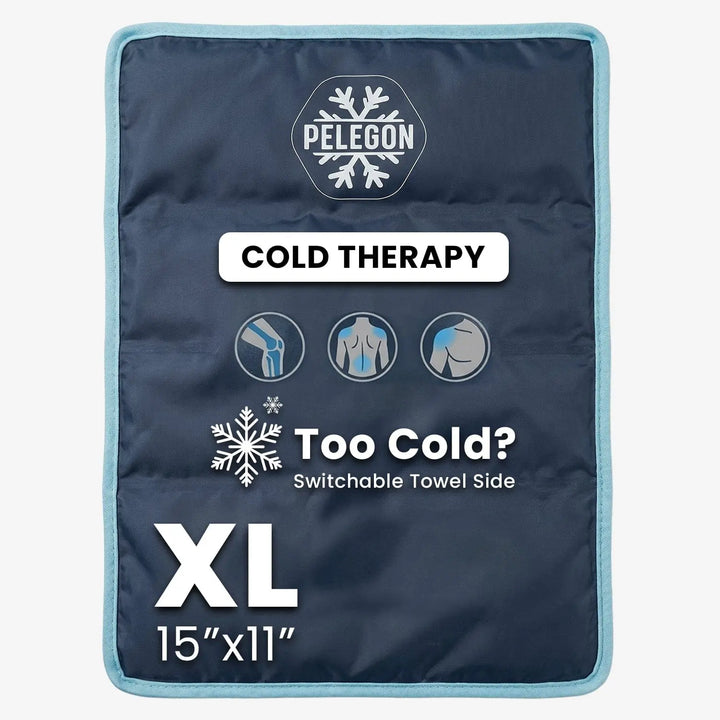
Pelegon Ice Packs for Injuries
Pelegon’s flexible ice packs for injuries stay pliable after freezing and use sectioned chambers to distribute the gel evenly. The soft fabric side makes this flexible gel ice pack wrap especially comfortable for knees, shoulders, hips, and the back.
- Large: 12 × 8 inches
- XL: 15 × 11 inches
- Soft fabric side
- Double-sealed edges
- Sectioned gel chambers
- Broad or targeted coverage
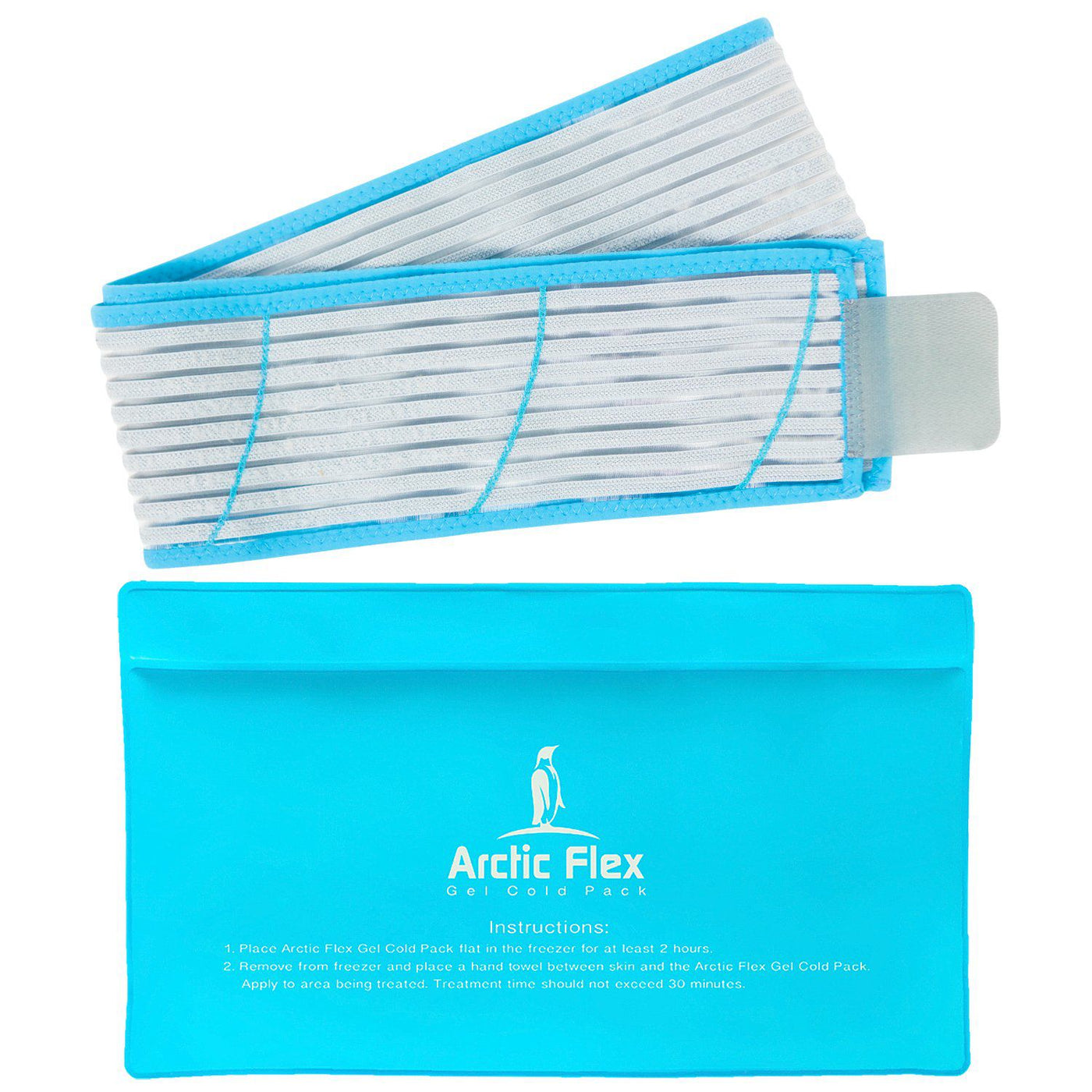
Arctic Flex Ice Pack
Arctic Flex uses non-toxic silica gel that stays pliable when frozen. This hot-and-cold flexible ice pack for knee discomfort suits people managing arthritis, sprains, strains, or post-surgical soreness.
- Hot or cold use
- Non-toxic silica gel
- Latex-free vinyl
- Tear-resistant exterior
- Sealed construction
- Pliable after freezing

Rester’s Choice Gel Soft Ice Pack
This approximately 2.6-pound flexible gel ice pack provides broad coverage for the back, hips, and thighs. Its sectioned construction distributes the gel evenly, although the extra weight may feel cumbersome on smaller joints.
- Approximately 2.6 pounds
- Hot or cold use
- Sectioned gel layout
- Heavy-duty binding
- Non-abrasive exterior
- Large-area coverage

RelaxCoo Large Flexible Ice Pack
RelaxCoo combines low-freezing-point gel with a soft plush exterior that also absorbs condensation. The movable flexible gel ice pack wrap works well as a flexible ice pack for ankle, knee, foot, or elbow discomfort.
- Plush fabric exterior
- Low-freezing-point gel
- Thick nylon cover
- Wide sealed edges
- Multi-joint use
- Reusable construction

FlexiKold Gel Soft Ice Pack
FlexiKold remains pliable after freezing and uses extra-thick nylon with double-sealed seams. It is one of the best flexible ice packs for rotating between body areas and works as a flexible ice pack for shoulder soreness when held securely in place.
- Pliable proprietary gel
- Extra-thick nylon
- Double-sealed seams
- Multi-area coverage
- Reusable cold therapy
- Suitable for curved joints
Choose Cold Therapy That Fits
Keeping high-quality flexible ice packs for injuries in a home first-aid or post-surgery recovery kit means reliable cold therapy is ready when pain or swelling appears. Soft, contouring designs maintain closer contact with curved areas, making treatment more comfortable and helping distribute cold evenly across the affected joint.
When comparing flexible reusable ice packs, choose a size and shape that fits the intended body area without slipping or creating excessive pressure. Always place the soft fabric side against the body or add a protective towel, and follow the manufacturer’s recommended treatment time to reduce the risk of frostbite.
Know when icing Is not enough
If severe swelling, sharp pain, weakness, or limited movement persists despite careful icing, consult a doctor or physical therapist. The right at-home tools can support recovery while helping restore everyday comfort and mobility.
Frequently Asked Questions
How long can you safely leave a flexible gel ice pack on an injury?
Limit each session to 20 minutes unless a healthcare professional gives different instructions. Always use a fabric barrier and check the skin frequently.
Can flexible reusable ice packs be refrozen indefinitely?
No. Replace flexible reusable ice packs if the exterior, seams, or gel chambers become damaged, brittle, swollen, or discolored.
Are flexible ice packs safe to use immediately after joint surgery?
Only with approval from the surgical team. Post-operative instructions may specify the placement, duration, compression level, and frequency of cold therapy.
When should you use a flexible ice pack versus a heating pad?
Use a flexible ice pack for recent injuries, inflammation, or swelling; use gentle heat for stiffness or muscle tension without active swelling. Avoid either treatment when sensation or circulation is impaired unless a clinician approves it.
What should you do if your flexible gel ice pack accidentally punctures or leaks?
Stop using it immediately and follow the manufacturer’s disposal instructions. Wash exposed skin with soap and water, and seek medical advice if the gel is swallowed or causes irritation.

