




Shooting pain from the lower back into the leg can turn standing up, sitting at a desk, walking, or sleeping into a daily challenge. Sciatica occurs when a nerve root in the lower spine becomes irritated or compressed, creating pain that radiates through the buttock and down the leg. For people seeking non-invasive options that may reduce reliance on oral pain medication, at-home sciatica pain relief devices can provide targeted support.
The right option depends on what is driving the symptoms. Cold therapy may help calm acute pain, heat can relax tight muscles, electrical stimulation may alter pain signals, and mobility aids can improve stability while walking. No single product is the best device for sciatica pain in every situation. This guide examines device categories, clinical evidence, individual products, and practical selection tips. These tools should complement - not replace - medical evaluation and appropriate treatment.
Question 1
How long do you expect to need this equipment?
Thanks for voting
Your answer has been counted.
Must-Have Sciatica Pain Relief Devices for Home Use
We evaluated these products according to their clinical rationale, ergonomics, safety, ease of independent use, and value. Some provide temporary symptom relief through cold, heat, massage, or electrical stimulation. Others are assistive sciatica tools that reduce strain during walking, standing, and transfers. None removes the disc, bone, or tissue pressure that may be irritating a spinal nerve root.
Pelegon Lower Back Ice Pack Wrap
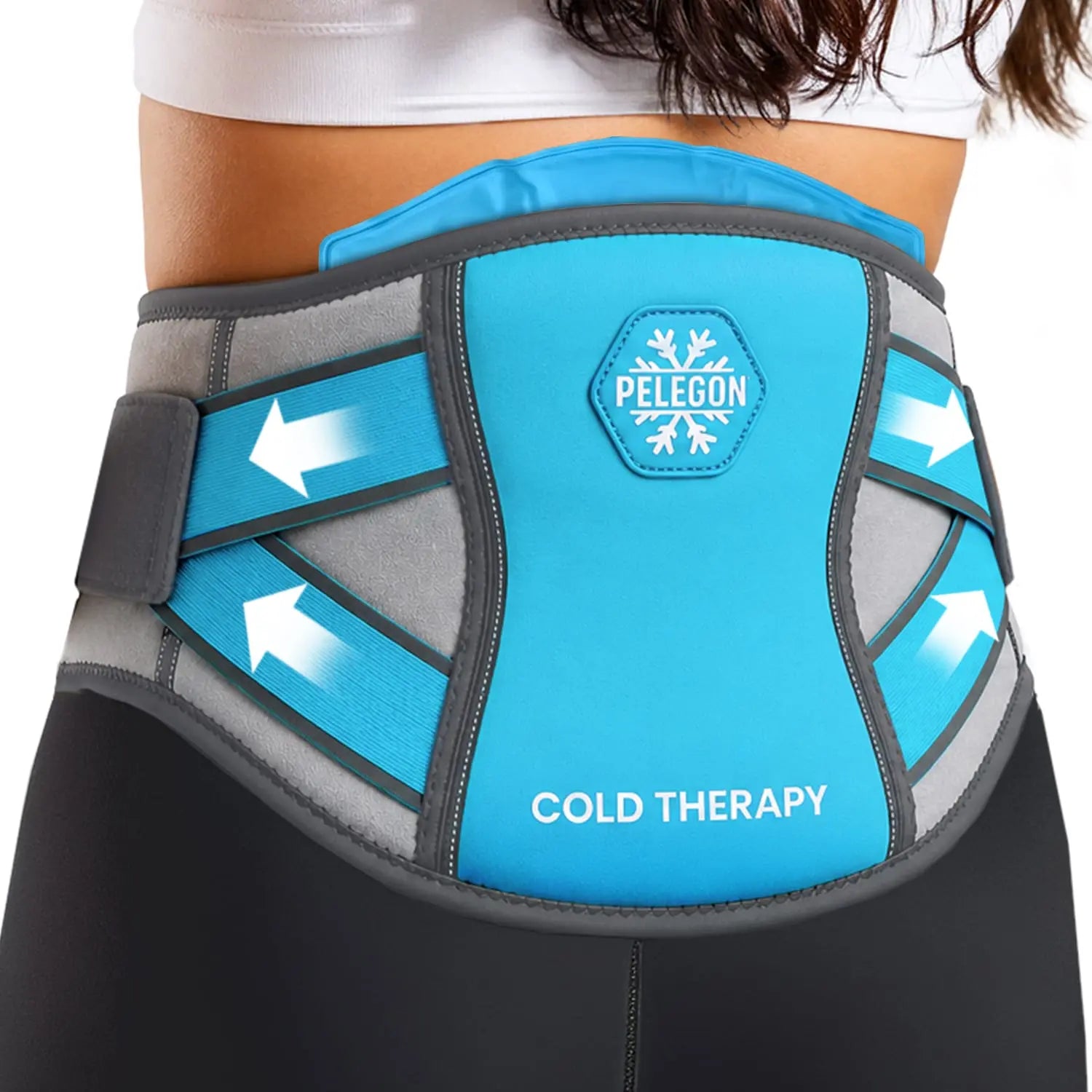
This hands-free ice pack for sciatic nerve pain places flexible cold therapy across the lumbar region rather than attempting to numb the entire leg. Cooling may temporarily decrease local pain and muscle spasm during a recent flare-up. The 12.9″ × 7.4″ insert remains flexible when frozen, while the 50″ brace and dual straps maintain close, adjustable contact for up to 20 minutes.
Benefits
- Hands-free lumbar coverage
- Flexible, reusable gel insert
- Adjustable double compression
- Protective freezer bag included
Limitations
- Relief is temporary
- Unsuitable with reduced skin sensation or circulation
Clinical fit: Health guidance supports wrapped cold packs for short-term lower-back pain relief. Choose this wrap for an acute, sore, or spasm-dominant lumbar flare—not as a treatment for nerve compression. Check the skin regularly and stop for blotching, pain, or excessive numbness.
Shop the Lower Back Ice PackHzwioe Cordless Lower Back Massager

This cordless cushion combines gentle heat, vibration, memory-foam lumbar support, and an inflatable lift. Heat may relax guarded muscles, while support can make sitting more comfortable for people whose symptoms worsen at a desk or in a car. Its 135-degree curve, manual and automatic modes, rechargeable battery, and 15-minute shutoff support convenient short sessions.
Benefits
- Heat, vibration, and support in one device
- Cordless and portable
- Adjustable operating modes
- Automatic shutoff
Limitations
- May feel bulky behind some chairs
- Does not decompress a spinal nerve
Clinical fit: Heat may ease associated muscle spasm, although responses vary. This is best for stiffness or muscular tension accompanying sciatica, not new swelling, heat-sensitive skin, or areas with impaired sensation.
Pelegon Ice Packs for Injuries
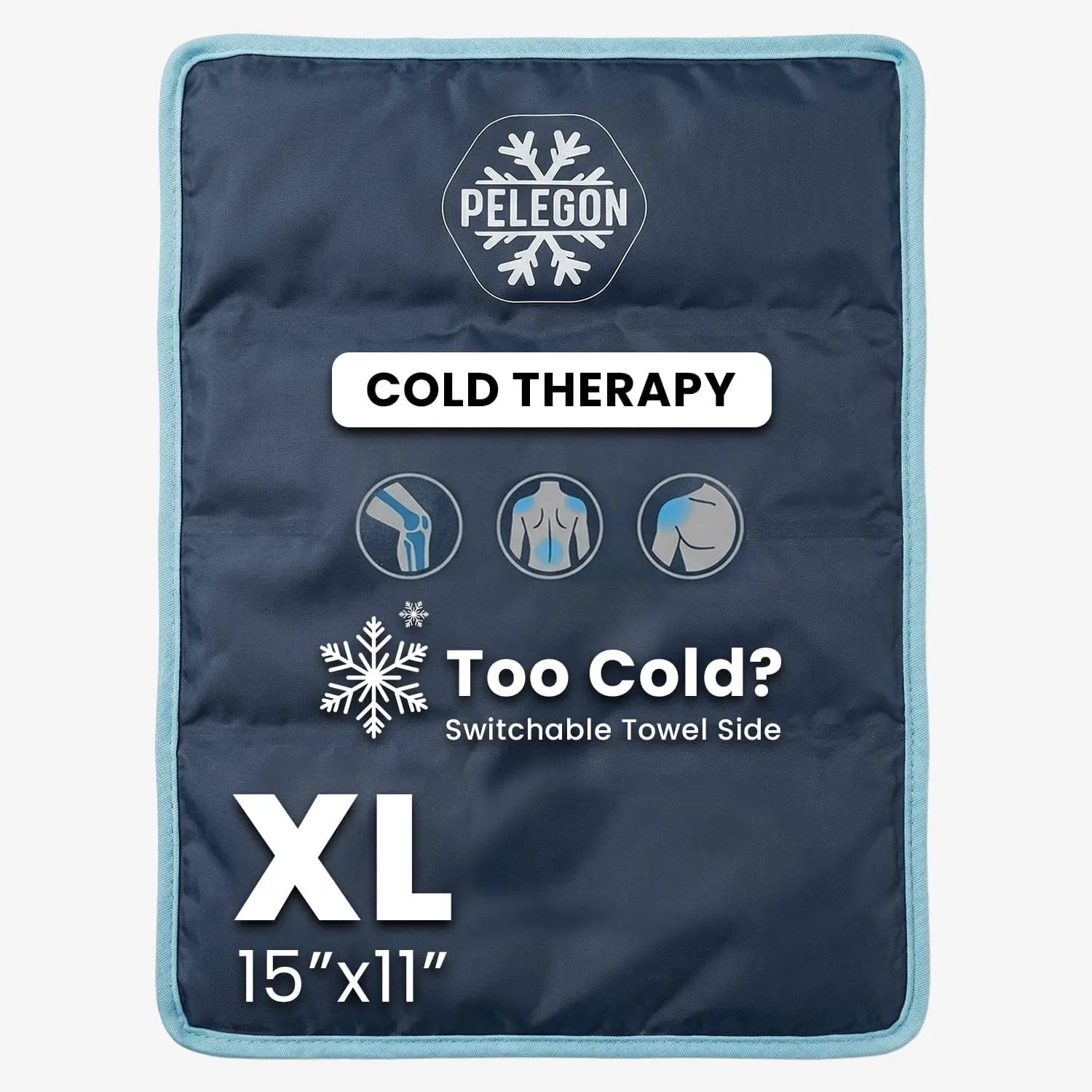
This reusable pack offers broader placement than a fitted lumbar wrap, making it useful when soreness is concentrated around the buttock, hip, or thigh. The XL 15″ × 11″ option covers a large area, while the 12″ × 8″ version provides more precise placement. Sectioned gel chambers distribute cold evenly, and the fabric surface adds a protective layer.
Benefits
- Two coverage sizes
- Stays flexible when frozen
- Soft skin-facing surface
- Double-sealed, reusable construction
Limitations
- No integrated securing straps
- Cannot address the source of radiating pain
Clinical fit: Cold may temporarily reduce localized pain and spasm after activity. Buy this pack when symptoms shift between the lower back, hip, and upper leg and flexible placement matters most. Limit sessions to the product instructions and monitor the skin.
Shop Pelegon Ice PacksKitusi Sciatica Pain Relief Deep Tissue Massager

Kitusi combines vibration, warmth, pulsing stimulation, and light in a compact rechargeable device. These settings may help relax superficial muscles and modify pain perception, but claims that the product reduces nerve inflammation are not established. Adjustable intensity makes it most appropriate for users who prefer experimenting with several gentle sensations rather than forceful percussion.
Benefits
- Four operating functions
- Multiple intensity levels
- Rechargeable and portable
- 30-minute shutoff
Limitations
- Limited product-specific clinical evidence
- May irritate highly sensitive areas
Clinical fit: Consider it for mild muscular discomfort around the hip or lower back. Avoid pressing directly over the spine, areas of numbness, broken skin, or any location where stimulation increases radiating pain.
Pelegon Quad Cane with 4-Prong Base
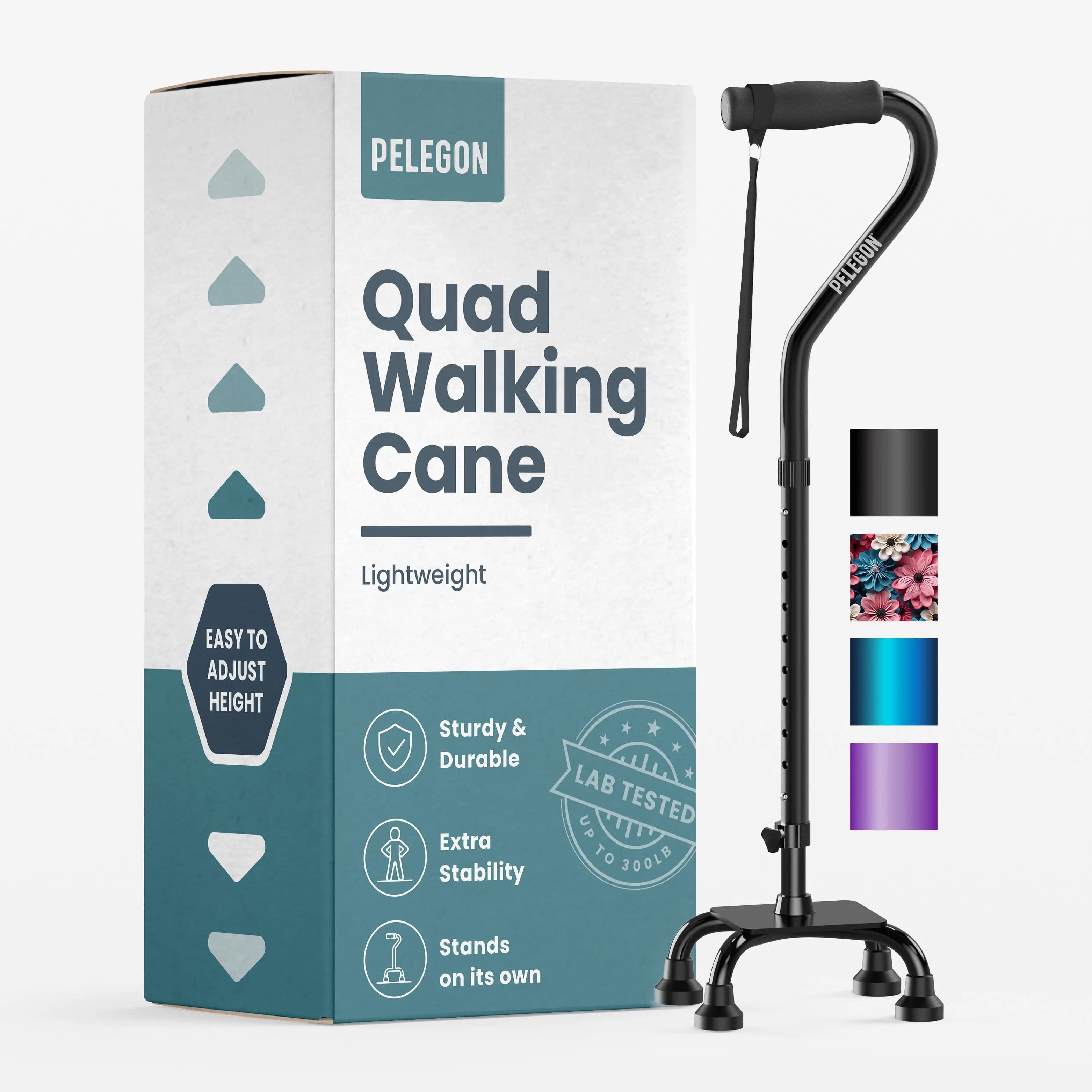
Among walking aids for sciatica, a quad cane can improve balance when pain, guarded movement, or leg weakness makes walking feel uncertain. It does not reduce nerve irritation directly; instead, it provides four points of contact and a stable place to shift part of the load. Pelegon’s 2.1-pound cane supports up to 300 pounds and adjusts from 29.5″ to 38.5″.
Benefits
- Self-standing four-point base
- Adjustable ergonomic height
- Anti-slip rubber tips
- Lightweight aluminum frame
Limitations
- Slower than a single-point cane
- Incorrect height or technique may increase strain
Clinical fit: Buy it when stability—not direct pain treatment—is the priority. A clinician should confirm the correct height and walking pattern, particularly with new weakness, foot drop, or substantial balance loss.
Shop the Pelegon Quad CaneTOLOCO Deep Tissue Massage Gun

The TOLOCO delivers adjustable percussion through ten interchangeable heads, with a listed 12 mm amplitude and speeds up to 3,200 rpm. Percussion may temporarily reduce muscle soreness and tightness in the glutes or hamstrings. It should never be used as an attempt to “release” the sciatic nerve or applied directly over the lumbar spine.
Benefits
- Multiple heads and speeds
- Cordless operation
- Battery-level display
- Suitable for large muscle groups
Limitations
- Difficult to position independently on the back
- Forceful use may aggravate nerve symptoms
Clinical fit: Percussion devices have some support for short-term flexibility and exercise-related soreness, but sciatica-specific evidence is limited. Choose it for accompanying muscle tightness and stop if tingling, numbness, or shooting pain intensifies.
Pelegon Toilet Safety Rail
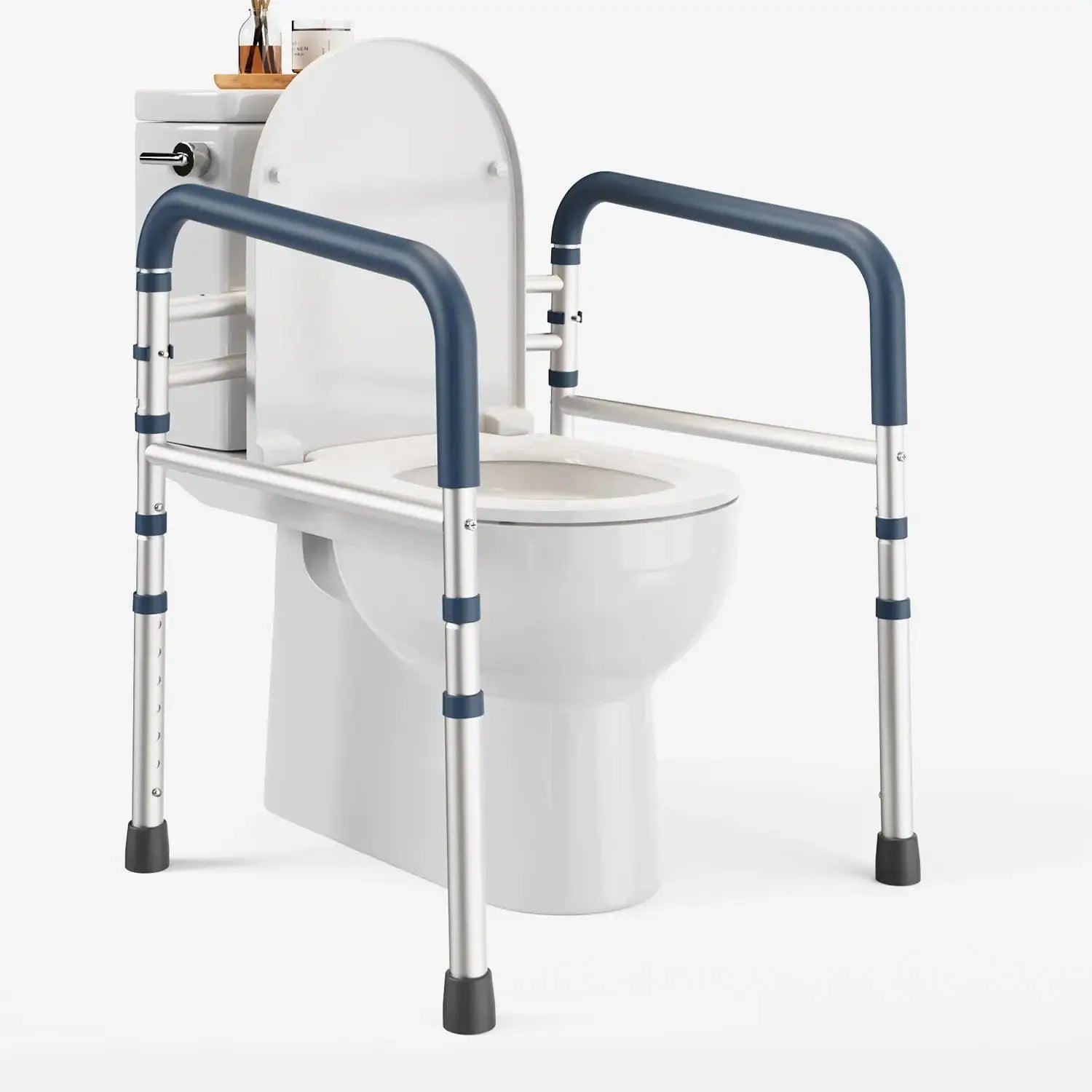
Sitting down and rising from a low toilet can provoke pain through deep bending and forceful pushing. This rail provides two stable handholds so users can control the transfer and reduce strain through the back and painful leg. Its 350-pound capacity, adjustable 24″–30″ height, and 19″–24.5″ width accommodate different users and bathroom layouts.
Benefits
- Two-sided transfer support
- Adjustable height and width
- Padded grips and rubber feet
- Tool-free assembly
Limitations
- Requires adequate bathroom clearance
- Provides no direct analgesic effect
Clinical fit: This assistive product belongs among the best sciatica pain relief products for preserving daily function, even though it does not relieve nerve compression. It suits users whose pain is triggered primarily by sit-to-stand transfers.
Tenker TENS Unit Muscle Stimulator

TENS sends a mild electrical current through adhesive skin electrodes. This may interfere with pain signaling and provide temporary relief while the unit is operating, although results differ and evidence for routine sciatica treatment remains uncertain. Tenker provides 24 modes, 20 intensity levels, dual outputs, eight pads, and a rechargeable battery.
Benefits
- Highly adjustable intensity
- Two treatment channels
- Portable and rechargeable
- Includes several pad sizes
Limitations
- Does not work for everyone
- Requires careful electrode placement
Clinical fit: TENS is a non-invasive trial option for temporary pain control, not a cure. Do not use it with a pacemaker, during pregnancy without medical approval, with epilepsy, or over numb, broken, or irritated skin. Ask a clinician where to place the pads.
Pelegon Car Cane Handle
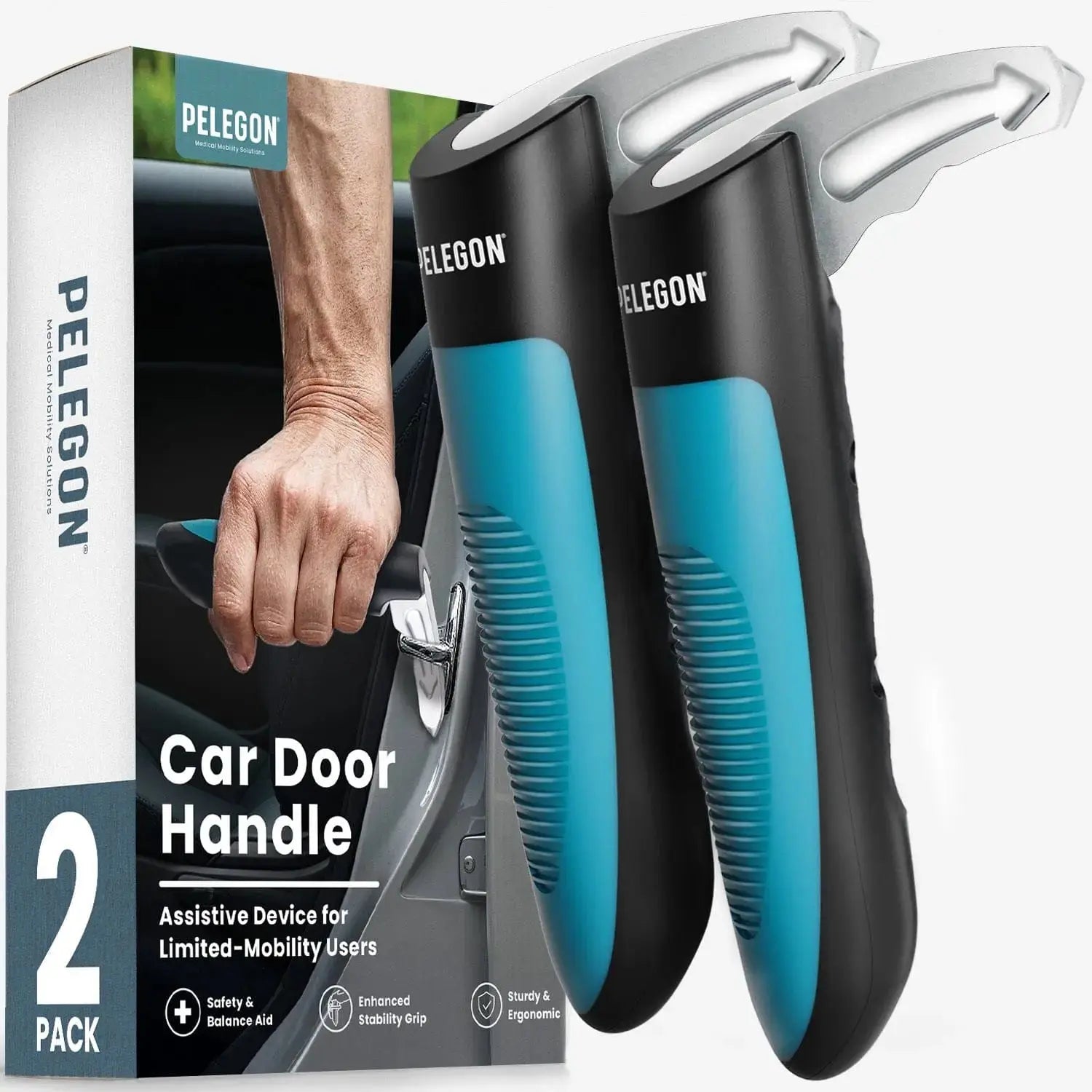
Twisting and pushing upward from a low car seat can aggravate radiating pain. This compact handle fits into a compatible U-shaped door latch, creating a firm leverage point for a more controlled rise. Its forged steel hook supports up to 300 pounds, while the rubberized grip helps reduce slipping without permanent installation.
Benefits
- Reduces effort during car transfers
- 300-pound capacity
- Tool-free operation
- Compact glovebox storage
Limitations
- Not compatible with every door latch
- Must be inserted securely before loading
Clinical fit: Transfer aids reduce mechanical demand rather than treating pain. This handle is a practical choice for people who can stand independently but need extra leverage to avoid forceful bending or twisting when leaving a vehicle.
Shop the Pelegon Car CaneROXOFIT Hip Brace
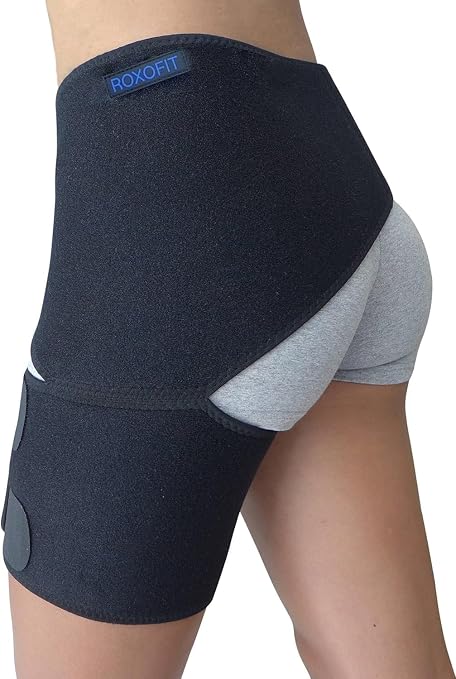
This neoprene brace wraps around the waist, hip, and upper thigh to provide warmth and compression during movement. Some users may find that support reduces discomfort from accompanying hip, groin, or gluteal muscle strain. It cannot stabilize the lumbar nerve root or correct a herniated disc, and it is unlikely to help every pattern of true radicular pain.
Benefits
- Adjustable targeted compression
- Low-profile design
- Can be worn during activity
- Three available sizes
Limitations
- May trap heat or irritate skin
- Benefit depends on the pain source
Clinical fit: Bracing evidence for sciatica is limited. Consider this product when muscular hip discomfort accompanies walking, not as a primary treatment for weakness, numbness, or pain caused by confirmed spinal compression. Remove it if symptoms or skin irritation increase.
What Research Says About Sciatica Pain Relief Devices
Clinical guidelines place non-drug care within a broader conservative plan rather than treating any home device as a cure. The American College of Physicians recommends options such as superficial heat, massage, and exercise for low back pain, although its guideline primarily addresses nonradicular pain and cannot be applied directly to every case of sciatica. NICE guidance emphasizes remaining active, self-management, and exercise while advising against routinely offering TENS, belts, or corsets for low back pain with or without sciatica.
TENS has a plausible gate-control mechanism: mild electrical impulses stimulate sensory nerves and may reduce the transmission of pain signals to the brain. A large 2022 meta-analysis found moderate-certainty evidence of lower pain intensity during or immediately after TENS across pain conditions. However, results for chronic low back pain remain inconsistent, and sciatica-specific evidence is limited.
Practical relief made for everyday movement
Explore Pelegon’s back pain products for targeted comfort, easier movement, and dependable support at home.
Heat and cold work differently. Superficial heat increases local blood flow and may ease muscular guarding and stiffness. Cryotherapy reduces tissue temperature and nerve conduction, which can temporarily decrease localized pain and muscle spasm.
Lumbar cushions may improve sitting tolerance, while correctly fitted walking aids for sciatica and transfer supports can reduce load, twisting, and effort during daily movement. They do not mechanically decompress a spinal nerve, and prolonged reliance on rigid supports may be counterproductive.
Ultimately, sciatica alternative treatments and home sciatica tools are most useful for controlling symptoms and preserving activity while irritation settles.
Persistent weakness, worsening numbness, or changes in bladder or bowel control require prompt medical evaluation - not another pain relief device.
Choosing Support That Matches Your Symptoms
There is no single sciatica device that works for every person or every stage of recovery. Cold therapy may suit a recent, painful flare-up, while heat or gentle massage may be more comfortable when muscular stiffness dominates. Mobility and transfer aids can provide added stability when walking, standing, or rising from a seated position aggravates symptoms.
Passive relief works best alongside active recovery. Short walks, frequent position changes, and clinician-approved stretches can help maintain mobility without forcing painful movement. Start gently, follow each device’s safety instructions, and track whether it improves function - not simply whether it creates a temporary sensation.
Frequently Asked Questions
Will relying on a daily lumbar support cushion or back brace weaken my core muscles over time?
Prolonged dependence may contribute to reduced muscle engagement. Use supports for specific activities or limited periods unless a healthcare professional recommends otherwise.
Should I apply an ice pack or a heating pad when my sciatic nerve first flares up?
Start with cold for a recent, painful flare-up; use heat when stiffness or muscle spasm dominates. Protect the skin and limit either treatment to about 15-20 minutes.
Can an at-home back stretcher or decompression device actually cure my sciatica?
No - home decompression devices cannot reliably cure sciatica or correct its underlying cause. They may provide temporary comfort, but aggressive stretching can worsen symptoms.
Is it safe to combine heat therapy with deep-tissue tools like foam rollers during an acute flare-up?
Avoid combining intense heat with forceful deep-tissue pressure during an acute flare-up. Gentle use may be tolerated, but stop immediately if pain begins traveling farther down the leg.
What does it mean if my sciatic pain moves further down into my calf or foot while using a device?
Pain moving farther down the leg may indicate increased nerve irritation. Stop using the device and seek medical advice if the change persists or accompanies worsening numbness or weakness.


